
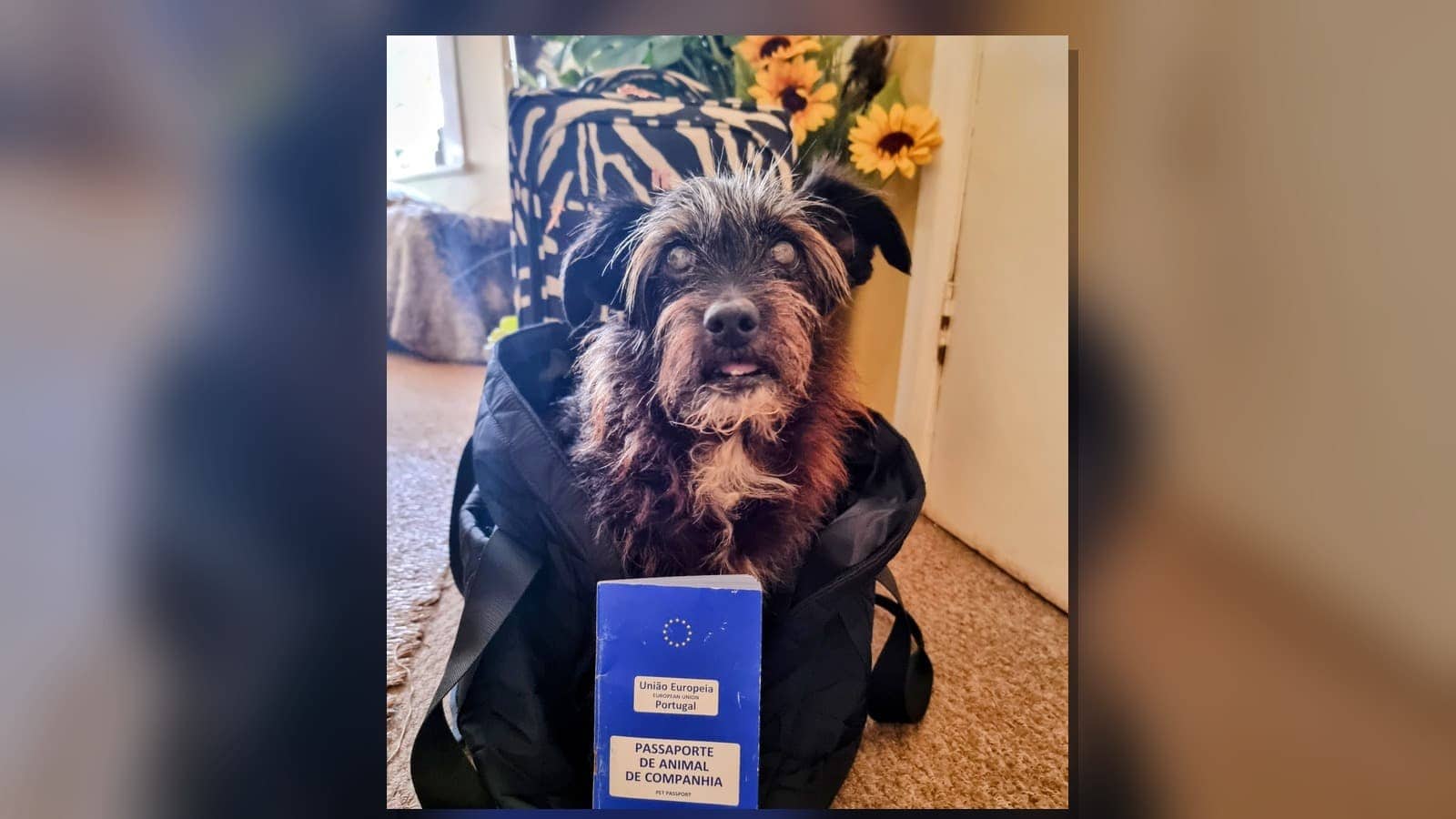
EU pet passport guide: a simple anatomy of the blue booklet, the 2026 changes, and the passport pages that can make or break your journey.
⏱️ 60-Second EU Pet Passport Check
The passport may look official. That does not mean it will work for your journey.
Before you trust that little blue booklet, ask yourself:
✓ Was it issued to someone who is still eligible to use it?
✓ Does the microchip number match your pet?
✓ Is the rabies page complete, clear, stamped, and signed?
✓ Are the owner details correct and signed?
✓ Does your dog need tapeworm treatment for this route?
✓ Are you travelling from Great Britain and actually need an Animal Health Certificate instead?
- What Is an EU Pet Passport? 📘
- Who Can Use an EU Pet Passport in 2026? 🛂
- How Much Does an EU Pet Passport Cost? 💷
- What Is Inside an EU Pet Passport? 📖
- The Key EU Pet Passport Sections Explained 🧩
- EU Pet Passport vs Animal Health Certificate 🧾
- EU Pet Passport Audit: What to Check Before You Travel ✅
- Common EU Pet Passport Mistakes That Can Cause Problems ⚠️
- Can an Old EU Pet Passport Still Be Useful? 🧳
- When the Passport Is Not Enough 🧭
- EU Pet Passport FAQs ❓
- Cookie Has One More Mission for You 🧩
At first glance, the little blue booklet looks simple enough. However, one missing vet signature, one wrong microchip number, or one unclear rabies entry can ruin your travel plans before the journey even begins.
For years, the EU pet passport felt like the golden ticket for smooth pet travel in Europe. In 2026, that golden ticket only works when your pet, your residency, and your journey all match the rules.
Instead of adding more generic border-rule confusion, this guide looks straight inside the document itself. You will learn what an EU pet passport is, who can still use it, which pages matter most, and what to check before your pet’s journey turns into a stressful border problem.
What Is an EU Pet Passport? 📘
An EU pet passport is an official travel document for dogs, cats, and ferrets.
It is a small blue booklet, but it is not just a pretty travel accessory. It records your pet’s identity, microchip or tattoo code, rabies vaccination, owner details, and the vet who issued the passport.
In simple terms, it works like your pet’s official travel health record.
The passport helps vets, transport companies, and border staff check that the animal travelling is the same animal listed in the document. That is why the microchip number, rabies entry, vet stamp, and owner details matter so much.
However, an EU pet passport is not proof that every journey is automatically allowed. It only works when the document is valid, correctly completed, and accepted for your situation.
That is where many pet parents get caught out.
In 2026, the question is no longer only “Do I have an EU pet passport?” The real question is:
Am I still allowed to use this passport for this journey?
Who Can Use an EU Pet Passport in 2026? 🛂
This is the part many pet parents now get wrong.
An EU pet passport must match three things: your pet, your residency, and the journey you are making.
⚠️ 2026 update: From 22 April 2026, GB residents should no longer rely on an EU pet passport as their main travel document from Great Britain into the EU.
Even if the booklet was issued before that date, you may need an Animal Health Certificate instead. Great Britain means England, Scotland, and Wales. Northern Ireland has its own pet travel rules.
Quick Residency Check
| Your situation | Can you use an EU pet passport? | What to check before travel |
|---|---|---|
| Your main home is in the EU | Usually yes, if the passport is valid, correctly completed, and accepted for your journey. | Check the owner details, microchip number, rabies page, vet stamps, and any route-specific treatment rules. |
| You live in Great Britain | Do not rely on an old EU pet passport as the main document for travel from Great Britain into the EU. | Ask your vet whether you need an Animal Health Certificate before you book or travel. |
| You have an old EU pet passport | Maybe, but only if your residency and journey still allow it. | Do not judge the passport by appearance alone. A booklet can look valid and still fail for your situation. |
| You want to use it as a record | Yes. Even when it no longer works as the main travel document, it can still help as evidence of past entries. | Keep it for microchip details, rabies history, previous vet entries, and tapeworm treatment records. |
So before you book the ferry, train, or flight, ask yourself:
Where do I live, and is this passport still valid for my journey?
How Much Does an EU Pet Passport Cost? 💷
There is no fixed EU-wide price for an EU pet passport.
Prices vary widely depending on the country, the vet clinic, and the work your pet needs during the appointment.
Some vets charge a relatively low price for the passport booklet itself. However, consultation time, microchip checks, rabies vaccination, and paperwork can push the final bill much higher.
That is why one pet parent might pay around €20, while another spends closer to €100 or more.
The important thing is to ask what the price actually includes.
Is the price only for the passport booklet?
Are the vet consultation and microchip check included?
Will the rabies vaccination page be reviewed or updated?
And are there any extra paperwork fees you should know about?
A low price is not always the full price. And a higher price may include more of the work needed to make the document complete.
Before booking, ask your vet for a clear breakdown. The EU pet passport may be a small blue booklet, but the cost behind it is not always as simple as it looks.

🍀 Cookie’s Official Triple Passport File
When I moved to the UK with my human, she thought one pet passport would last my whole life.
Adorable. Incorrect.
My human’s brain runs on the autism spectrum. Mine runs towards squirrels, snacks, and border-control drama. Naturally, one of us had to become the responsible adult.
I travel with her because she needs grounding, routine, and one small black supervisor with strong opinions. Unfortunately, border control does not accept “I am emotionally essential” as official documentation. Rude, but noted.
So we collected paperwork.
Microchip? Present. Rabies page? Stamped. Vet signatures? Collected. Human panic? Fully operational. Snacks? Still ignored by international authorities, which remains suspicious.
One passport became two. Then three.
Each little blue booklet now contains a chapter of my career: Portugal, the UK, Europe, ferry cabins, document checks, emergency folders, and several moments where I stayed calm while my human stared at paperwork like it had personally betrayed her.
🐾 Cookie’s Mini Border Quiz
Can you spot which country issued my passports?
Click here to leave your answer in the commentsNo pressure. I will be silently judging your border-control skills.
I did not ask to become an international paperwork specialist. But here we are. Three passports later, still underpaid, still under-snacked, and still clearly the most qualified member of this travel department.
What Is Inside an EU Pet Passport? 📖
An EU pet passport is divided into official sections. Each one has a job.
Some pages identify your pet. Others record vaccinations, treatments, and vet details. Together, they help prove that the animal travelling matches the document being checked.
The most important sections usually include:
- owner details
- description of the animal
- microchip or tattoo information
- passport issuing details
- rabies vaccination record
- tapeworm treatment, if required
- other health entries
At first, these pages may look like simple paperwork. However, small details matter.
That is why this article looks at the EU pet passport like a user manual.
Before you worry about routes, ferries, flights, or border rules, you need to understand the booklet itself.
The Key EU Pet Passport Sections Explained 🧩
Once you open the EU pet passport, the document starts to feel less like a booklet and more like a checklist.
Each section has a purpose. Some prove who your pet is. Others prove who the owner is. Others show whether the rabies vaccination and vet entries are complete.
Here are the key pages to understand before you travel.
Owner Details (Section I)

Owner Details, Section I, identifies the person linked to the pet passport.
It usually includes the owner’s name, address, and signature. This matters because the passport connects your pet to the person responsible for their travel and care.
If this part is incomplete, unsigned, or does not match your situation, it can raise questions during travel checks.
Animal Description (Section II)
Animal Description, Section II, records your pet’s basic identity details.
It may include your pet’s name, species, breed, sex, colour, and date of birth. These details help border staff and transport teams check that the animal travelling matches the document.
For example, if the passport says “dog” but the breed, colour, or age does not seem to match the pet in front of them, it could create unnecessary questions during travel checks.

Microchip or Tattoo Details (Section III)

The marking page, Section III, is one of the most important parts of the whole passport.
It records your pet’s microchip or tattoo details. For modern pet travel, the microchip number is the key identity marker.
The microchip number in the passport should match the microchip inside your pet. It should also match the microchip number used for the rabies vaccination record.
If the microchip number is wrong, unclear, or does not match, the passport can quickly become a problem during travel checks.
Passport Issuing Details (Section IV)
Passport Issuing Details, Section IV, shows who issued the passport and when.
It should include the authorised vet’s details, stamp, signature, and contact information. This helps prove that the passport was issued properly by a qualified professional.
It also gives border staff or another vet a way to identify the person or practice responsible for creating the document.

Rabies Vaccination Record (Section V)

Rabies Vaccination, Section V, is the page many people worry about most.
It should show the vaccination date, vaccine name, manufacturer, batch number, valid from date, valid until date, and vet signature or stamp.
This page must be clear, complete, and up to date.
If your pet’s rabies record is missing, expired, or not completed correctly, the passport may not work for travel.
Rabies Antibody Titration Test (Section VI)
Rabies Antibody Titration Test, Section VI, is used to record a rabies blood test result when one is required.
This section is not used for every pet journey. In many routine pet travel situations, it may be blank, and that does not automatically mean the passport is incomplete.
The test is mainly relevant when a pet is entering the EU from certain non-EU countries or territories where extra rabies checks are required. When it is needed, the result is recorded in this section by the vet.

Tapeworm Treatment for Dogs (Section VII)

Tapeworm Treatment, Section VII, applies mainly to dogs travelling on specific routes.
Some destinations require tapeworm treatment before entry. When that rule applies, your vet should record the treatment in the passport or in the correct travel document.
The entry usually needs the date, time, product name, vet stamp, and vet signature.
This page is easy to forget, but it can matter a lot when a country requires proof of tapeworm treatment before travel.
Other Health Pages
The passport may also include space for other vaccinations, treatments, clinical examinations, or official notes.
These pages can help, but border staff and transport teams usually check other sections first during standard pet travel.
For most journeys, the pages that matter most are still the owner section, microchip page, rabies section, issuing vet details, and tapeworm treatment when required.
EU Pet Passport vs Animal Health Certificate 🧾
Many travellers mix up these two documents.
A pet passport usually works as a reusable booklet. It records your pet’s identity, microchip details, rabies vaccination, and key vet entries. When the document matches your pet, your residency, and your journey, you may be able to use it again.
By contrast, an Official Veterinarian prepares an Animal Health Certificate, often called an AHC, for one specific journey from Great Britain into the EU. The certificate is prepared for a specific journey and has a limited travel window.
Quick Comparison: EU Pet Passport vs AHC
| Feature | EU Pet Passport | Animal Health Certificate | Important Note |
|---|---|---|---|
| Type of document | Reusable booklet-style document | Certificate prepared for a specific journey | Both support pet travel, but they do not do the same job |
| Main purpose | Records identity, microchip details, rabies vaccination, and key vet entries | Confirms that your pet meets the travel requirements for that trip | A passport can show history, but it may not replace the certificate you need |
| Who usually uses it | Eligible EU residents travelling with dogs, cats, or ferrets | Many people living in Great Britain who travel from Great Britain into the EU | In 2026, residency matters as much as the document itself |
| How long it lasts | Can stay with your pet as a long-term record when valid and accepted | Covers a specific travel window and journey | Always check timing before travel, especially if using an AHC |
| Common trap | A booklet may look valid, but your situation may still make it unusable | A certificate may be correct, but it only covers the journey listed on it | Your pet, your residency, and your journey decide which document you need |
That is the trap. The booklet may look valid, the rabies page may be up to date, and the microchip may match perfectly. But if the document is not valid for your residency and journey, it may still fail when it matters.
EU Pet Passport Audit: What to Check Before You Travel ✅
Before you trust the little blue booklet, give it a proper inspection.
This is not about reading every page like a lawyer. It is about spotting the small details that can cause stress later.
Start with the pages most likely to matter during travel checks:
- Check that the owner section is complete and signed.
- Match the microchip number in the passport with your pet’s chip.
- Confirm that the rabies vaccination is still valid.
- Look at the rabies entry carefully. It should be clear, stamped, and signed by the right vet.
- Find the issuing vet’s details in the passport.
- Ask whether your route requires tapeworm treatment.
- If your dog needs tapeworm treatment, check the date, time, product name, vet stamp, and vet signature.
- Make sure the document works for your residency and journey.
The biggest mistake is assuming that “having a pet passport” is enough.
It is not.
A pet passport only helps when the details inside it are correct, current, and accepted for the trip you are making.
Common EU Pet Passport Mistakes That Can Cause Problems ⚠️
Most EU pet passport problems do not look dramatic at first glance.
That is what makes them dangerous.
A passport may sit in your travel folder looking perfectly fine. Then, during a check, one missing detail can suddenly become the detail that stops the journey.
Watch for these common mistakes before someone else finds them for you.
| Mistake | Why it matters | What to check |
|---|---|---|
| Microchip number mismatch | Your pet’s identity no longer matches the booklet. | Compare the microchip number in the passport with your vet record before a big trip. |
| Incomplete rabies page | A missing date, unclear valid-until field, absent stamp, or incomplete vaccine details can create stress during checks. | Look for the vaccination date, valid-until date, vaccine details, batch number, vet stamp, and vet signature. |
| Wrong vet added the rabies entry | Not every vet can complete every part of an EU pet passport. | Check that an authorised vet completed the section that matters for travel. |
| Passport works for the pet, but not the journey | This is the 2026 trap. The rabies vaccine may be valid, the microchip may match, and the booklet may look perfect. | Confirm that the passport works for your residency, route, and direction of travel. |
| Tapeworm treatment missing | Some dog routes require tapeworm treatment, and this is not the detail to remember at the ferry terminal. | Check the date, time, product name, vet stamp, and vet signature when your route requires it. |
Can an Old EU Pet Passport Still Be Useful? 🧳
Yes. Keep an old EU pet passport.
Useful, however, does not always mean enough.
If you live in Great Britain, do not rely on an old EU pet passport as your main travel document for entering the EU from Great Britain. In many cases, you need an Animal Health Certificate instead.
However, that old passport still earns its place in your travel folder.
Your vet can use it to check your pet’s microchip details, rabies vaccination history, previous vet entries, and tapeworm treatment records. You can also use it when planning paperwork, comparing vaccination dates, or explaining your pet’s travel history.
So do not throw it away.
Treat it like an old travel file. It may no longer open every border, but it still carries evidence that can help you prepare the next journey.
The golden ticket may have changed. The records inside it still matter.
When the Passport Is Not Enough 🧭
This guide explains the EU pet passport itself.
It does not replace checking the full travel rules for your route.
That matters because pet travel is never only about one booklet. The right document can depend on where you live, where your journey starts, where you are going, how you are travelling, and whether your dog needs extra treatment before entry.
For example, travelling from Great Britain into the EU is not the same as returning to Great Britain. Travelling within the EU is not the same as entering from outside the EU. And a dog may have extra requirements that do not apply to every pet or every route.
So use this article as your passport manual.
Then, before booking, check the full route rules in my detailed guides:
- travelling from the UK to the EU with your dog
- bringing your dog back to Great Britain
- travelling with a dog on ferries, trains, or public transport
The passport may be the booklet in your hand.
But the journey still needs the right paperwork, timing, and route plan.
EU Pet Passport FAQs ❓
Which animals can have an EU pet passport?
Dogs, cats, and ferrets can have an EU pet passport. Other animals, including birds, rabbits, reptiles, and rodents, follow separate national rules.
What is an EU pet passport?
An EU pet passport records your dog’s, cat’s, or ferret’s identity, microchip or tattoo details, rabies vaccination, owner details, and key vet entries.
Who can apply for an EU pet passport?
Pet owners usually qualify when their main home is in an EU country. An authorised vet in an eligible country must issue the passport.
Can GB residents use an EU pet passport in 2026?
People living in Great Britain should not rely on an EU pet passport for travel into the EU. Even when the booklet looks valid, many travellers now need an Animal Health Certificate instead.
Is an EU pet passport the same as an Animal Health Certificate?
No. An EU pet passport is a reusable booklet-style document when valid and accepted. An Animal Health Certificate is a certificate issued for a specific journey, often used by GB residents travelling from Great Britain into the EU.
Does an EU pet passport expire?
The booklet itself can last for the life of the pet, as long as there is space for entries and the details remain valid. However, the rabies vaccination, vet entries, and your eligibility to use the passport still matter.
Who can update the rabies page in an EU pet passport?
Rabies vaccination details in an EU pet passport must be entered by a vet allowed to update that section. A rabies entry added by the wrong vet can create travel problems.
What happens if an EU pet passport is lost?
If an EU pet passport is lost, speak to an authorised vet in a country that can issue pet passports. They may need to check your pet’s microchip, vaccination records, and previous documentation before issuing a replacement or advising on the correct travel document.
🐾 Cookie Management Requires Your Report
Did this guide make you check your pet passport with sudden suspicion?
Excellent. That means this inspection was not a complete waste of my supervisory talents.
Tell me what surprised you, what you checked, or whether your own pet passport is now sitting on the table being silently judged.
Click here to leave your commentCookie will be reviewing all human paperwork drama with professional concern and mild judgement.
Cookie Has One More Mission for You 🧩


🐾 Cookie Requests One Final Click
Did this guide help? Did you enjoy Cookie’s Passport Challenge?
Click the Like button below to tell Cookie Management that this inspection was worth the paperwork drama.
No pressure. I am only watching with professional interest.
Before you go:
💬 Leave a comment
📩 Subscribe for free
🐶 Share with another pup parent
Bureaucracy hurts. Cookie helps. 🐾
📚 Official Sources and References
EU rules on travelling with pets and other animals in the EU – Your Europe
https://www.gov.uk/government/news/new-eu-rules-for-pet-travel-for-gb-residents
https://europa.eu/youreurope/citizens/travel/carry/pets-and-other-animals
PT1 NI – How to Complete Pet Passports – v6.0 (March 2026).PDF
Taking your pet dog, cat or ferret abroad: Rabies vaccinations and boosters – GOV.UK
Please note that the external links provided are for informational purposes only. I am not responsible for the content on these sites, and I do not receive any compensation for mentioning them.



Leave a Reply