
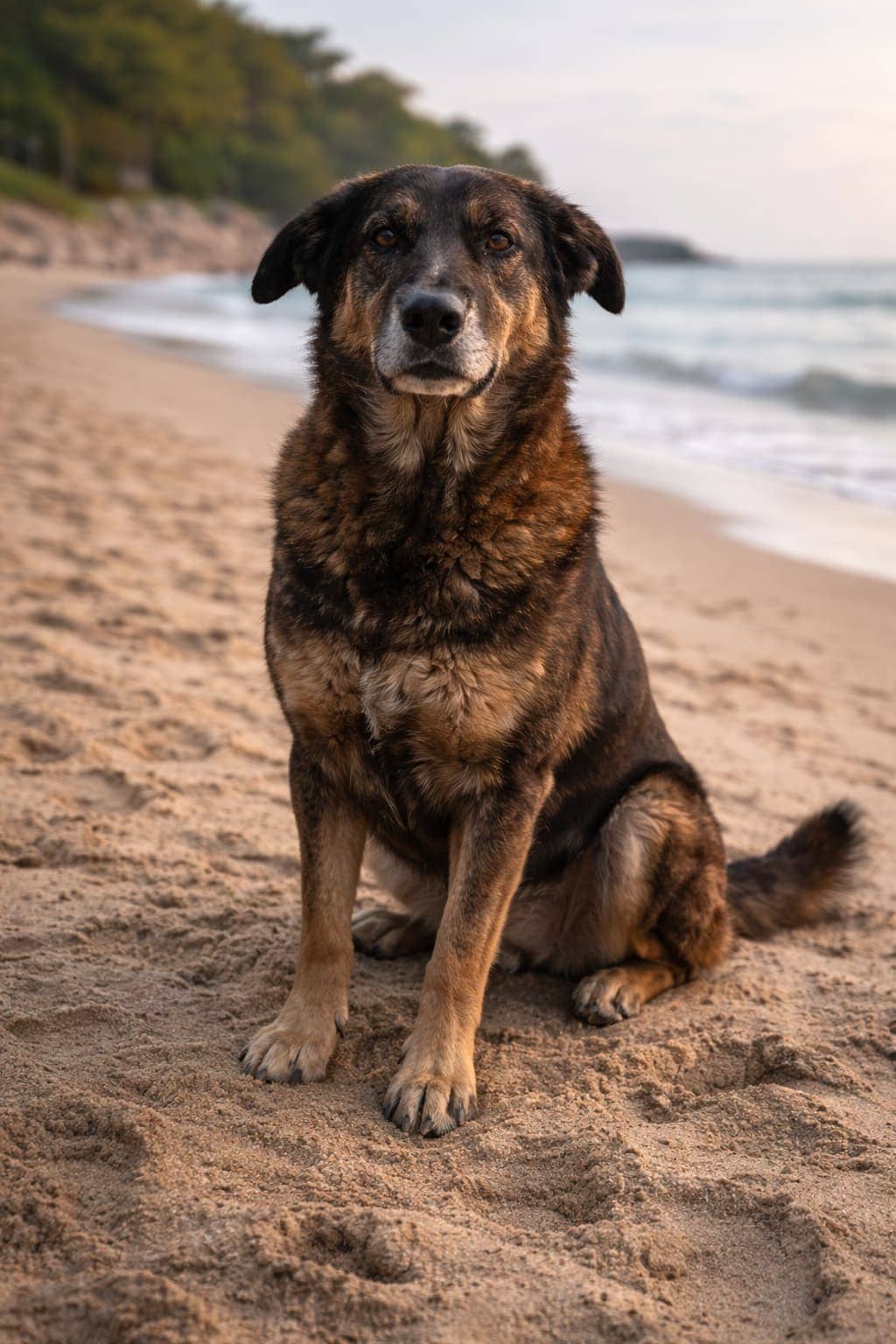
Community dog Orelha raises a simple but uncomfortable question.
What happens when responsibility is shared, but protection is not?
- Orelha: When a Community Dog Raises a Difficult Question ❓
- Who Community Dog Orelha Was 🐕🦺
- What happened to Orelhas? 🐶
- When One Story Represents Many 🐾
- Community Dogs and Belonging 🏘️
- How Community Dog Orelha Acted as a Guardian 🐕
- The Human Contradiction ⚖️
- Cookie as a Counterpoint 🐶
- Brazil: Culture, Awareness, and Legal Protection 📜
- The UK Response to Animal Cruelty ⚖️
- Prevention Through Education: Changing Mentalities Early 🧠
- Final Thoughts 💭
- Key Takeaways 🔑
- FAQs About Community Dog Orelha ❓
TLDR 🔍
Community dog Orelha highlights a gap between shared responsibility and real protection. This article explains what community dogs are and why these cases matter. It also looks at how prevention can start through education and accountability.
Orelha: When a Community Dog Raises a Difficult Question❓
Cases of violence against animals are hard to process.
They keep happening, again and again.
Each new story pushes us to reflect.
It asks us to look beyond the event itself and see what it reveals.
The story of community dog Orelha is one of those cases.
It goes beyond a single incident.
It asks how society handles responsibility and protection today.
This article does not aim to shock.
It aims to reflect and provide context.
Who Community Dog Orelha Was 🐕🦺

Orelha was a community dog.
He lived in a shared public space and formed part of everyday life.
Like many community dogs, local people knew him and accepted his presence.
Community dogs exist in many countries.
They are not always abandoned in the traditional sense.
They belong to places rather than to individuals.
In many cases, several people care for them informally.
This care often happens without official responsibility.
Over time, they become part of routines, streets, and neighbourhoods.
Orelha was one of those dogs.
What happened to Orelhas? 🐶
Orelhas was brutally attacked by a group of teenagers.
He suffered multiple severe injuries and was found in critical condition. Due to the extent of his wounds and the level of suffering he endured, there was no possibility of recovery. The only humane option left was euthanasia.
Orelhas did not die from illness or an accident. He died as a result of deliberate human violence.
Orelhas’ death sparked widespread indignation far beyond his local community. Orelhas’ death reached far beyond his local community. His story was shared across countries, prompting necessary conversations about animal protection and human responsibility.
Orelhas became a symbol, not by choice, but because his suffering exposed a reality many prefer not to see.
When One Story Represents Many 🐾
However, Orelha’s story is not an exception.
Similar cases affect community dogs and other animals.
They occur in many places and under different conditions.
Yet, the same pattern repeats.
In some cases, people kill dogs near public spaces.
In others, people abandon animals at supermarket entrances.
Some pets are discarded because they become inconvenient.
These stories rarely receive lasting attention.
They surface briefly and then fade.
As a result, many animals remain unseen and unprotected.
Community Dogs and Belonging 🏘️

We often associate protection with ownership.
However, community dogs also form bonds.
Over time, they recognise familiar faces.
In daily life, they follow local routines.
As a result, they build strong ties to a place and to the people around them.
In this sense, community dogs are not without connection.
Instead, they connect in a different way.
Orelha lived within his environment.
For this reason, his sense of belonging required protection.
How Community Dog Orelha Acted as a Guardian 🐕
Guardian dogs are often linked to private homes.
People usually picture dogs that live indoors and follow one family.
However, community dogs can also play a protective role.
Over time, these dogs learn local routines.
They recognise familiar faces.
They stay close to the same places, such as cafés, beaches, markets, or streets.
As a result, they add stability to daily life.
People know them.
They become part of the local environment.

Orelha acted as a guardian in this way.
He did not rely on force or warning.
He offered calm presence instead.
This type of loyalty does not depend on ownership.
It grows through coexistence.
That is why it deserves recognition and protection.
The Human Contradiction ⚖️
People often describe themselves as rational and progressive.
Yet cases of animal cruelty still occur.
This contrast is hard to ignore.
In some situations, harm comes from people who claim to care.
Societies invest in development and innovation.
At the same time, vulnerable animals still suffer.
Because of this gap, stories like Orelha’s raise a clear concern.
Empathy exists.
But how far has it really progressed?
Cookie as a Counterpoint 🐶

Living with a dog teaches simple lessons over time.
Trust grows through routine.
Presence becomes part of daily life.
When I look at Cookie, I see how naturally dogs offer these qualities.
She trusts without guarantees.
She shows consistency through everyday behaviour.
This kind of bond often develops inside a home.
It grows through shared spaces, repeated routines, and care.
Orelha offered the same presence in a different setting.
He did not share a home, but he shared an environment.
Like many community dogs, he trusted the people around him.
Both relationships grow from trust.
The setting changes, but the offering remains the same.
Brazil: Culture, Awareness, and Legal Protection 📜
Brazil has long used popular culture to reach large parts of the population.
Television, especially soap operas, plays a central role in everyday life.
Shared stories often help shape social attitudes.
They influence how people understand responsibility, care, and coexistence.

At the same time, Brazil has a clear legal framework to address animal cruelty.
Federal law treats cruelty and abuse against animals as crimes.
In recent years, penalties for harming dogs and cats have increased.
The law now allows prison sentences, fines, and bans on animal ownership in serious cases.
This mix of cultural influence and legal protection matters.
It shows that awareness and accountability can exist side by side.
However, cases like Orelha’s show the limits of laws and narratives.
Enforcement, education, and shared responsibility remain ongoing challenges.
The UK Response to Animal Cruelty ⚖️
In the UK, animal cruelty is a criminal offence.
The Animal Welfare (Sentencing) Act allows courts to impose prison sentences and fines in serious cases.
The law recognises animals as sentient beings that can feel pain and distress.
Laws cannot undo harm once it occurs.
However, they set clear limits and define responsibility.
Protection should not depend on ownership.
It should not depend on visibility either.
Prevention Through Education: Changing Mentalities Early 🧠
Laws play an important role in responding to animal cruelty.
However, laws alone do not change behaviour.
Prevention starts with education.
How children learn to relate to animals shapes how they act later in life.
Respect, care, and empathy do not appear by chance.
Adults pass them on through example and daily actions.
For this reason, some countries now invest in education as well as punishment.
The goal is simple.
Teach kindness early, before harm occurs.
Denmark: Teaching Empathy from an Early Age 🫶
In Denmark, empathy is taught as a practical skill linked to everyday interaction.
This includes how children relate not only to other people, but also to animals.
From primary school onwards, students attend regular lessons on emotions and responsibility.
They also learn how their actions affect others.

Children learn to recognise fear, stress, and discomfort in others.
This awareness extends to living beings that cannot speak for themselves.
Within this approach, animals are not treated as objects or background elements.
They are part of lessons about care, boundaries, and respectful coexistence.
By introducing these values early, the education system aims to shape behaviour before harm occurs.
The focus is prevention, not punishment.
Colombia: Animal Respect Introduced into National Education 🤝
More recently, Colombia approved a national law that places animal respect within formal education.

The curriculum now includes content on animal welfare and responsible behaviour.
Children learn that animals are living beings capable of feeling pain and stress.
This education starts in early years and continues through secondary school.
It applies to pets, community animals, and wildlife.
By teaching these values early, the goal is to reduce cruelty before it happens.
The focus is prevention through understanding, not reaction after harm.
France: Animal Welfare as Part of Civic Education 🏛️
In France, animal welfare is included in moral and civic education at primary school level.
Children learn that animals are sentient beings.
They are taught basic principles of care, respect, and responsibility.
These lessons connect animal welfare with everyday social behaviour.
Respect for animals becomes part of learning how to live responsibly within a community.

Final Thoughts 💭
This article is not written from anger.
It is written from concern.
Remembering cases like that of community dog Orelha matters.
Not to repeat details, but to question patterns.
Yes, governments should be pressed to strengthen animal protection laws.
Legal frameworks matter and accountability is essential.
However, responsibility does not begin with the state alone.
It begins at home.
Parents play a key role in shaping how children relate to animals.
Teaching empathy and respect for street animals is part of that responsibility.
At the very least, harm should never be normalised.
If help is not given, damage should not be done.
Reflection is often the first step toward change.
Silence rarely protects the vulnerable.
Justice for Orelha.
And for every unseen soul who never had a voice. 🐾🕊️
Key Takeaways 🔑
- Community dogs are part of shared public life and deserve protection.
- Violence against animals often follows repeated and ignored patterns.
- Protection should not depend on ownership or visibility.
- Laws matter, but they cannot prevent harm on their own.
- Education plays a key role in shaping empathy and responsibility.
- Teaching respect for animals early helps reduce cruelty later in life.
- Responsibility starts at home, through everyday attitudes and behaviour.
FAQs About Community Dog Orelha ❓
A community dog lives in shared public spaces rather than inside one home.
Local people often recognise and informally care for these dogs.
Not in a legal sense.
However, community dogs often belong to a place and to the people who share it.
In many countries, animal protection laws apply regardless of ownership.
Cruelty and abuse are still considered criminal acts.
Any dog can react defensively in certain situations.
Fear, stress, pain, or past experiences can influence behaviour.
Community dogs are not aggressive by nature.
Calm interaction and respect for boundaries reduce risk.
Yes.
They offer stability, familiarity, and calm presence within a neighbourhood.
Yes.
Teaching empathy and respect for animals early can shape behaviour later in life.
Responsibility is shared.
Governments, communities, and families all play a role in prevention.
What are your thoughts on community dogs and shared responsibility? 💬
Have you seen situations like this in your own area, positive or challenging?
Your perspective matters.
Respectful discussion helps us understand where change needs to begin.
⬇️ Share your thoughts in the comments ⬇️

🐾 Cookie here!
Tap my paw if this story made you pause and reflect.
Your like helps these voices reach further.
Curious about who’s behind the pawprints and stories? Learn more about our journey, our bond, and what inspired this blog below. 💬
Want to see more moments that shaped our journey? Come explore other stories filled with love, growth, and Cookie’s spark. 🐾
Note: The external links are here to help you explore further. I don’t receive any commission for mentioning them, just sharing what I found useful.